
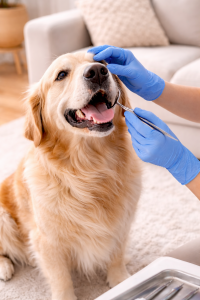
 If you’re anything like me, your dog isn’t just a pet — they’re family. Which means we obsess over the good food, the comfy beds, the long walks… but dental care? It’s surprisingly easy to overlook.
I used to think, “Their teeth look fine!” until one day I caught a whiff of that unmistakable dog breath and realized — dental health isn’t just about smell. It’s about overall health.
That’s when I discovered in-home dog teeth cleaning, and honestly? I don’t think I’ll ever go back.
Here’s why it has become one of my favorite “responsible pet parent” decisions.
It’s Way Less Stressful for Your Dog
Let’s be real — many dogs hate the vet.
The car ride alone can send some pups into full anxiety mode.
When a dental professional comes to your home:
-
Your dog stays in a familiar environment
-
Anxiety drops dramatically
-
There’s no overwhelming clinic noise
-
No waiting rooms
For nervous or older dogs especially, this can make a huge difference.
And a calmer dog usually means a smoother, more effective cleaning.
It Helps Prevent Bigger (and More Expensive) Health Issues
Dental disease is one of the most common health problems in dogs — and it often goes unnoticed until it’s advanced.
Poor dental health can lead to:
-
Gum disease
-
Tooth loss
-
Infection
-
Pain while eating
-
Even heart and kidney complications
Yes — it goes far beyond bad breath.
Routine cleanings are one of those things that feel optional… until they suddenly aren’t.
Preventative care almost always costs less than treating a serious issue later.
It’s Surprisingly Convenient
As busy adults (and especially busy parents), adding one more appointment to the calendar can feel impossible.
But when the service comes to you?
No driving.
No rearranging your day.
No sitting in a waiting room.
You can literally be answering emails or folding laundry while your dog gets sparkling teeth.
Convenience alone makes this worth considering.
So… How Often Should You Clean Your Dog’s Teeth?
This depends largely on your dog’s age, breed, and overall dental health, but here’s a helpful general guide:
🐶 Puppies (Under 1 Year)
Typically, professional cleanings aren’t necessary yet.
Focus on:
-
Getting them comfortable with mouth handling
-
Introducing brushing
-
Dental chews
Think of this stage as “training for lifelong dental habits.”
🐕 Young Adult Dogs (1–3 Years)
This is when plaque can start building quietly.
Recommended:
👉 A professional cleaning about once per year, unless your provider suggests otherwise.
Small breeds especially tend to develop dental buildup faster.
🐕🦺 Adult Dogs (4–7 Years)
Now dental care becomes more important.
Recommended:
👉 Every 6–12 months, depending on tartar buildup.
Regular cleanings at this stage can dramatically reduce the risk of periodontal disease.
🐾 Senior Dogs (8+ Years)
Senior pups need extra attention — but also extra gentleness.
Recommended:
👉 Every 6 months, or guided by a professional evaluation.
Maintaining oral health can support better eating habits, energy levels, and overall comfort in their later years.
Signs Your Dog Might Need a Cleaning Soon
Don’t wait if you notice:
-
Strong bad breath
-
Yellow or brown buildup
-
Red or bleeding gums
-
Dropping food
-
Pawing at the mouth
-
Reluctance to chew
Dogs are incredibly good at hiding discomfort — so visible signs matter.
Why In-Home Care Feels Like the Future of Pet Wellness
We’re seeing a big shift toward convenience-based care — from mobile groomers to veterinary house calls — because it simply works better for modern life.
Less stress for pets.
Less hassle for owners.
Better consistency with care.
It’s one of those upgrades that, once you try it, you wonder why you didn’t sooner.
Final Pet Parent Takeaway 🐾
We schedule our own cleanings without thinking twice — our dogs deserve the same proactive care.
In-home teeth cleaning is:
✔ Gentle
✔ Convenient
✔ Preventative
✔ Health-supporting
And most importantly — it helps your dog live a happier, healthier life.
Because those tail wags? We want as many years of them as possible.
